
20/10/2026 20:12
Does the Dub Include the Basket? YouTube Audio Reviews for Cambodian Kitchenware Shops

A product demonstration can show the right steamer pot while its translated voice promises the wrong bundle. For a Cambodian kitchenware shop, that mismatch can turn a useful video into a confusing enquiry: the customer expects a basket, but the advertised offer includes only the pot and lid. Before promoting a demonstration, check what each published audio version actually tells viewers. This workflow explains how to choose a worthwhile language review, compare spoken claims with the physical product and decide whether a dub is ready to share. It also explains why SMM delivery records cannot establish that viewers understood an offer.
1. Start with the purchase question the video must answer
Consider a hypothetical Phnom Penh kitchenware shop that makes an English demonstration for customers who prefer English. The presenter shows a pot, lid and optional steamer basket together. The shop wants viewers to understand which pieces belong to the advertised set before asking about availability. This is a specific communication goal; a general ambition to attract more views does not define what needs checking.
Write the intended takeaway before opening any promotion catalogue: a viewer should identify the included pieces, distinguish the optional accessory and know what information to send when enquiring. Give the reviewer the actual offer details. A fluent translation is still unsuitable if it describes a different bundle. Use one product and one offer for the first review so disagreements can be traced to a particular sentence.
2. Check whether automatic dubbing fits your audience
YouTube automatic dubbing creates translated audio, but availability depends on the video and supported languages. Check its Languages page in Studio. The current published language table does not list Khmer; do not plan a Khmer auto-dub as an available feature. Set the original video language accurately. These details are documented in [YouTube’s automatic dubbing help](https://support.google.com/youtube/answer/15569972?hl=en).
For a Cambodian shop serving mainly Khmer-speaking customers, a clearly recorded Khmer demonstration may deserve priority over reviewing additional foreign-language versions. A second language becomes useful when actual enquiries show a need and someone can review it competently. Do not select languages merely because they appear in a menu. Identify who will use the explanation, who can answer their questions and whether the shop can fulfil the offer being described.
3. Make review a deliberate release step
On a computer, YouTube documents the channel control under Studio, Settings, Channel, Advanced settings. Enable manual review before publishing dubs. For a video, open Content, select it, then Languages to preview the relevant language. Use its Audio menu to publish, unpublish or delete a dub. Follow the current [official instructions](https://support.google.com/youtube/answer/15569972?hl=en) if the interface changes.
Assign one person to coordinate the review and another, where possible, to verify the product facts. Keep a compact record containing the video reference, language, review date, reviewer and unresolved questions. An approval should refer to the version actually heard. Avoid a vague message such as 'translations checked' when only one language or the opening minute received attention. Reserve enough time to hear the whole demonstration before arranging its promotion.
4. Prepare a product fact sheet before listening
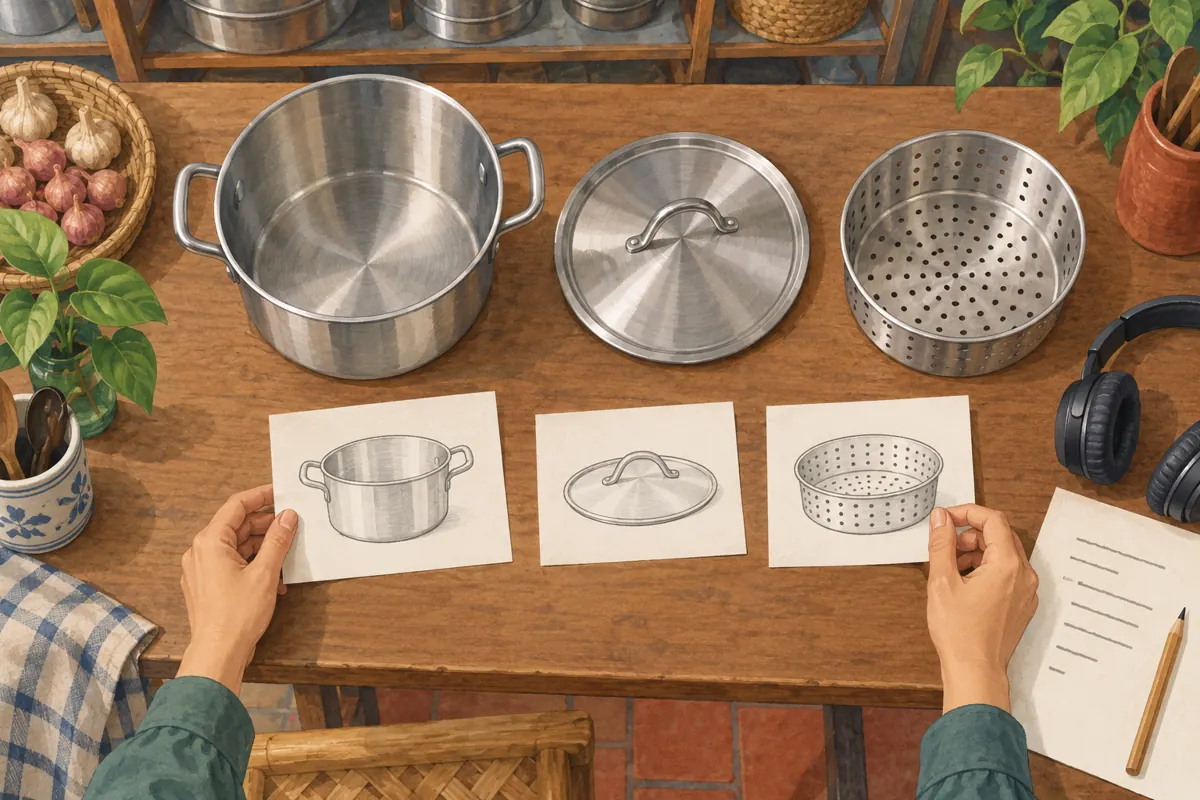
Put the pot, lid and basket on the counter and list what the offer includes. Add the model reference, relevant dimensions and any conditions the presenter mentions. Separate confirmed facts from details staff still need to verify. If the original video itself leaves the bundle ambiguous, fix the explanation before asking a translator to interpret it. Translation review cannot resolve an undecided sales offer.
For this hypothetical shop, the fact sheet might say: pot and lid included; perforated basket available separately; compatibility must be checked against the specific model. These are illustrative details, not claims about a real product. Give each component a consistent name and a reference photo. This helps a reviewer distinguish a basket from a lid even when everyday vocabulary differs between languages or staff members.
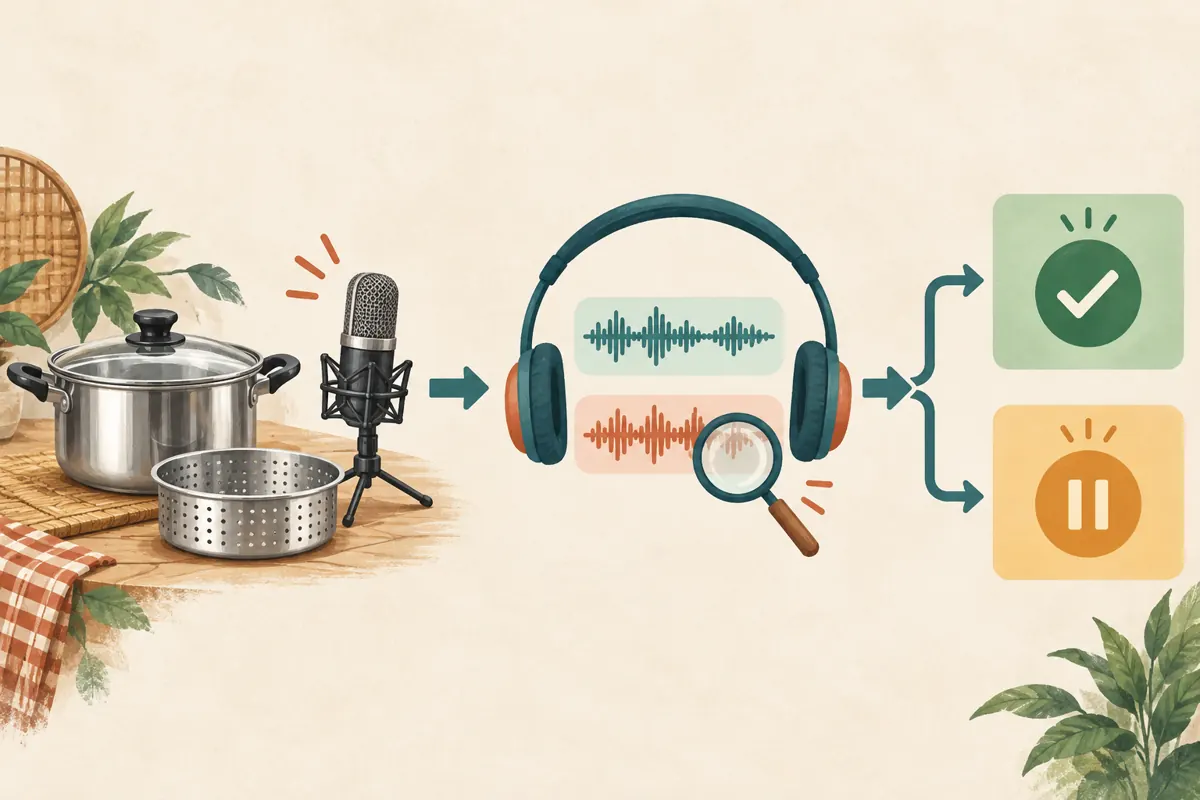
5. Listen for meaning, then compare it with the picture
Ask the language reviewer to listen once without reading the intended script. Have them describe the offer in their own words. This reveals what the audio communicates independently of what the business hopes it communicates. Then compare their account with the fact sheet. A reviewer who already knows the intended answer may unconsciously repair an unclear sentence while listening.
During a second pass, note the moment of each uncertainty and compare the speech with the object on screen. Pay special attention to exclusions, quantities, measurements and words such as 'optional', 'only' and 'separately'. In a hypothetical error, 'the basket is available separately' becomes an implication that it comes with the pot. Record the meaning heard and the intended meaning, rather than merely writing 'bad translation'.
Also check timing. A sentence about the lid may play while the presenter holds the basket. Even when individual words are correct, that combination can make the viewer assign the claim to the wrong component.
6. Classify problems by the decision they could change
Use three practical categories: changes the offer, obstructs understanding or sounds awkward. A changed inclusion, reversed exclusion or incorrect compatibility statement belongs in the first category. An unclear component name belongs in the second when the listener cannot identify the item. An unusual rhythm may belong in the third if the meaning remains clear. This is an editorial decision framework, not a YouTube rating system.
Hold any version that changes a purchase decision. Investigate confusing passages before approving them. Minor stylistic awkwardness can be acceptable when a competent reviewer confirms the meaning and the audience can follow it. Do not average the problems into a score that hides a serious mistake: several clear sentences do not compensate for one false bundle promise. Where reviewers disagree, ask them to explain the competing interpretations against the physical product.
7. Choose a clear response to an unsuitable dub
YouTube warns that automatic translations and voices can be imperfect and provides options to review, unpublish or delete tracks. Viewers can also select the original audio, as explained in [YouTube’s introduction to auto dubbing](https://blog.youtube/news-and-events/auto-dubbing-on-youtube/).
For the shop, the sensible response to a misleading track is to withhold it from the promotion plan. If it is already public, remove its availability while investigating and explain the correct offer to affected enquirers. Avoid relying on a small written correction to cancel an incorrect spoken promise. Someone listening while working may never read that correction.
YouTube says automatic dubs cannot be edited directly. Unpublishing permits later republication; deletion does not. See its [dubbing management guidance](https://support.google.com/youtube/answer/15569972?hl=en). Keep an internal note of the problem so a future review does not repeat the same investigation.
8. Keep SMM service claims outside the audio approval
The supplied public catalogue includes 'Youtube Comments ~ AI Generated Comments Based on Video/Short/Livestream Content ~ 10k/Days ~ Instant ~ 𝐍𝐎 𝗥𝗘𝗙𝗜𝗟𝗟'. Its title presents a generated-comment service, but the brief contains no supporting description. Treat the title’s delivery language as unverified catalogue wording. It supplies no evidence of Cambodian customers, language comprehension or useful product feedback.
Generated praise cannot validate a dub. Purchased engagement is not evidence of genuine interest, sales, ad delivery or Cambodian users. YouTube prohibits artificial increases in engagement metrics and warns that a hired promoter’s actions can affect the channel. Check the [fake engagement policy](https://support.google.com/youtube/answer/3399767?hl=en-uk) before considering a service; do not proceed with methods that violate it.
If the team already maintains panel records, keep those records separate from the language review. A delivery status answers an administrative question, not whether the basket explanation was understood. None of the supplied service descriptions establishes a translation-review capability. Do not buy comments as a substitute for a competent listener or present them as customer confirmation.
9. Test comprehension before expanding distribution
After editorial approval, ask a willing speaker of the intended language to watch the demonstration in ordinary viewing conditions. Explain that you are testing the explanation, not asking for praise or a purchase. Ask open questions: which pieces would you expect to receive, what would you need to confirm and what would you send the shop? Avoid leading them by naming the correct bundle first.
In a hypothetical test, the listener correctly identifies the pot and lid but cannot tell whether the displayed basket fits every model. That finding suggests a clearer compatibility sentence or visual comparison. It does not establish a conversion rate or prove that everyone will be confused. Record the uncertainty, revise the explanation where appropriate and repeat only the affected comprehension check before sharing the video more widely.
Use relevant, permission-based distribution: the shop’s own social posts or a reply to someone who requested that product explanation. Keep the invitation specific to the product question.
10. Review enquiries for recurring misunderstandings
Once the video is in use, note recurring questions without collecting unnecessary personal information. Record the product, the misunderstanding and the audio language if the customer volunteers it. Do not infer nationality from language. A useful entry is 'viewer expected basket in set'; a less useful entry is 'foreign audience problem'. The first points to an explanation the team can inspect.
Common mistakes include approving a track because the voice sounds confident, checking only the opening, assuming a caption change repaired the audio and treating extra comments as proof of clarity. Another is approving once and forgetting the video after the offer changes. Revisit the demonstration when the bundle, accessory or sales conditions change. Keep the review focused on whether the current viewer receives an accurate explanation and a realistic next step.

Frequently asked questions
Should a Cambodian shop make its original demonstration in English to obtain more dubs?
Only if English serves the intended viewers and the presenter can explain the product accurately. Do not make the main audience work through an unsuitable language just to obtain additional versions. For a shop whose enquiries are mainly in Khmer, a clear Khmer demonstration can be the more useful first investment.
Can a colleague who knows the product approve a language they do not speak?
They can verify the pictured components and the fact sheet, but they cannot establish what unfamiliar speech means. Pair their product knowledge with a competent language reviewer. If that review is unavailable, leave the version outside the promotion plan rather than guessing from the voice or a few recognisable words.
What should we ask someone reporting that the dub promises an included basket?
Thank them and ask which audio language they heard and approximately where the statement occurs. Check the passage against the current offer, then explain the included pieces directly. Avoid debating their interpretation before listening. Record the issue without publishing their private conversation or identifying information.
Does a successful comprehension check prove that the video will generate sales?
No. It provides limited evidence that a particular listener understood the explanation under those conditions. Sales also depend on suitability, availability, price and fulfilment. Use the check to improve communication, then track actual enquiries and confirmed orders separately without attributing every outcome to the audio change.
Can panel comments help identify translation mistakes?
Purchased or generated comments are unsuitable as evidence of independent audience understanding. A comment that repeats the intended product claim may simply echo the material supplied to it. Use a reviewer who can explain the meaning heard, and treat unsolicited customer questions as issues to investigate rather than automatic proof of a translation error.
Explore the current service catalogue, create an account, or ask a specific question through support tickets.
- YouTube Help: Use automatic dubbing
- YouTube Blog: Break down language barriers with auto dubbing on YouTube
- YouTube Help: Fake engagement policy
Prepared with AI assistance. Illustrations explain the workflow and do not represent customer results.