
21/10/2026 03:13
Rewatched or Misunderstood? YouTube Retention Reviews for Cambodian Awning Shops

A customer replaying an awning demonstration might admire the fabric, struggle to locate the crank connection, or simply miss something the presenter said. Those possibilities call for different responses. For a Cambodian workshop promoting retractable awnings on YouTube, the useful question is not whether a particular moment attracted attention, but what needs checking before the next video is made. This workflow combines a retention review, a close look at the footage and a simple comprehension exercise. It also explains why a panel service label cannot establish that viewers understood the product or want a quotation. The workshop and customer situations below are hypothetical, not reported results.
1. Define the customer question before opening analytics
Begin with one decision the video should help a prospective buyer make. An awning demonstration could explain manual operation, compare fabric samples or show what information the workshop needs before discussing a site visit. Combining all three may produce a useful overview, but it makes a replayed moment harder to interpret. Write the intended takeaway in a sentence that a colleague can check against the footage.
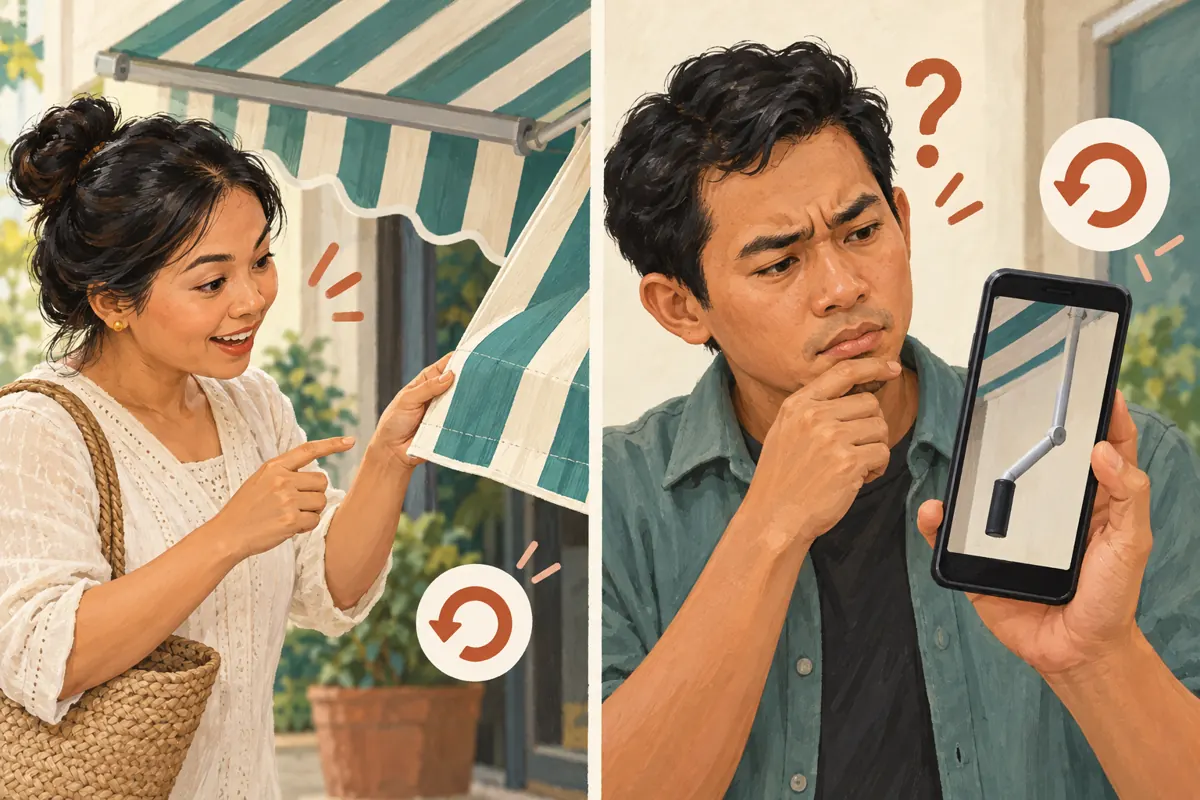
In a hypothetical Phnom Penh workshop, the selected video answers: “Where does the removable crank connect on this model?” The intended result is recognition of the connection point, not confidence to install an awning. A separate enquiry can establish model suitability, site conditions and service availability. This boundary keeps the promotional message useful without turning a short product demonstration into an installation promise.
2. Find the report and record its context
YouTube’s official instructions place audience retention within an individual video’s Analytics, accessible through Content in YouTube Studio. Look under Overview or Engagement. Data typically needs one to two days to process. Record the video URL, selected date range and review date before interpreting it. Keep any internal notes private rather than presenting an analytics image as customer proof.
YouTube describes spikes as moments involving additional watching, rewatching or sharing; a spike can also reflect unclear content. Dips indicate skipping or stopping. These patterns identify footage worth investigating, but they do not supply a viewer’s explanation.
Make a short review note with three fields: moment observed, what appears on screen and question to investigate. For example: “Crank connection close-up; presenter’s hand covers the socket; can a first-time viewer identify where the handle attaches?” Avoid writing a conclusion in the observation field.
3. Watch the surrounding sequence, not just the highlighted second
Replay the suspect passage from before the action begins until after it finishes. A confusing close-up may originate in the previous shot: the presenter switches sides, the camera changes orientation, or a different sample enters the frame. Pause at each transition and check whether an unfamiliar viewer could still identify the same component. Product expertise can make missing visual information feel obvious to the person filming.
For the hypothetical awning video, the wide shot shows the handle on one side, but the close-up comes from the opposite direction. The workshop should investigate orientation before assuming that viewers want more technical detail. Write down competing explanations, such as interest in the mechanism, uncertainty about the connection or difficulty hearing the narration. Treat each as a possibility to examine, not a finding about the audience.
4. Run a small comprehension exercise in the viewing language
Ask a colleague unfamiliar with that model, or a willing customer, to watch the passage on a phone. Use the language of the intended audience; for a Khmer demonstration, have a fluent Khmer speaker lead the exercise. Do not explain the missing step first. Ask the viewer to point out the connection and describe what the presenter has shown. This checks the explanation rather than testing the viewer.
Use neutral prompts: “Which part is the handle connecting to?” and “What information would you still need before contacting the workshop?” Avoid “Was that clear?” because a polite yes reveals little. Record anonymous observations without treating a few participants as representative of Cambodia. If someone identifies the socket incorrectly, you have a concrete filming problem to investigate even if the retention pattern remains ambiguous.
5. Choose a revision that matches the observed difficulty
Match the edit to the problem. If the component is hidden, change the camera angle. If the product changes between shots, keep the same demonstration sample throughout. If the narration uses an unfamiliar technical term, pair the term with an unobstructed view and a plain explanation. Making the entire video faster is unlikely to solve a missing reference point.
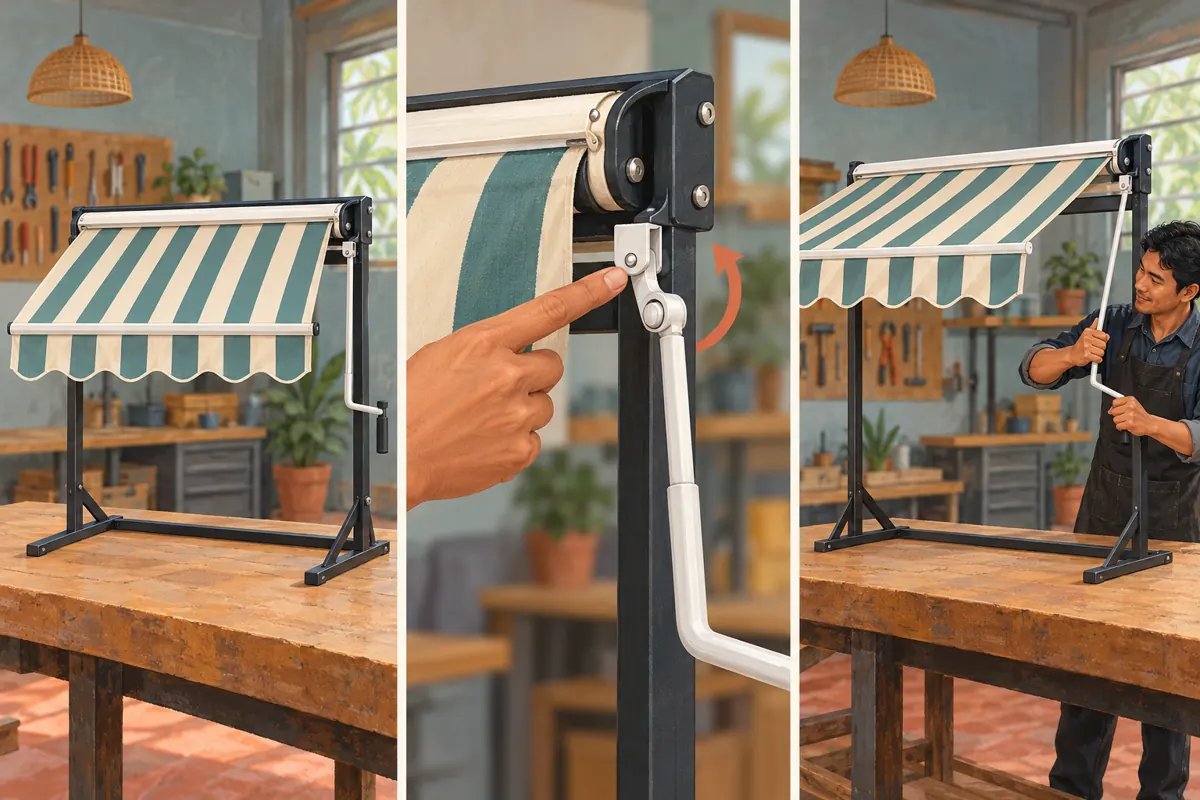
For the hypothetical workshop, plan a three-shot replacement sequence: the complete sample, the visible connection and the operation shown from a wider view. Use a tabletop teaching model where practical. Keep the presenter's hand out of the crucial detail until it is time to demonstrate the action. Preserve model-specific limitations and avoid implying that every awning works identically. The revision should let viewers understand what they are seeing without requiring them to infer an unseen step.
6. Keep the promotional promise aligned with the demonstration
Review the title, opening statement and enquiry invitation together. A video demonstrating a crank connection should not promise a complete installation guide. Similarly, showing an awning extending over a workshop entrance does not establish suitability for every Cambodian storefront. Explain which sample appears and what the demonstration covers. A clear boundary can prevent the wrong expectations before anyone presses play.
Give interested viewers a specific next step that fits the shop’s actual process. A hypothetical invitation might ask for the intended installation area and a general photo of the opening through the workshop’s usual contact channel. Ask customers to keep personal documents and unnecessary address details out of public comments. State that the workshop must assess the request before confirming suitability, price or an appointment. Retention and enquiries answer different questions, so neither should stand in for the other.
7. Evaluate SMM panel claims before treating them as promotion evidence
One public catalogue example is “Youtube Views ~ Video/Shorts ~ Max 10M ~ 50k/days ~ Instant ~ 𝐍𝐎 𝗥𝗘𝗙𝗜𝗟𝗟”. Its name identifies a views listing, but the supplied description is empty. The quantity, speed and refill wording are catalogue claims, not verified delivery findings. Nothing supplied establishes Cambodian viewers, comprehension, genuine interest or official advertising delivery. Do not use the listing as a way to validate this demonstration.
YouTube’s fake engagement policy prohibits artificial increases in engagement metrics and warns that a promoter’s actions can affect the hiring channel. Artificial traffic may be excluded, and violations can have account consequences. For this review, decline artificial engagement rather than trying to manufacture an interpretable sample. Purchased engagement is not evidence of sales or local demand. If promotion has already occurred, retain the provider records separately and acknowledge uncertainty about what the available audience data represents.
8. Compare revisions with an honest record of what changed
Keep a brief revision log before evaluating the next demonstration. Note the product model, language, main question, filming change and how the video was shared. If one video was sent mainly to existing customers and another was shared with a broader audience, their circumstances differ. A change in viewing behaviour cannot automatically be credited to the new camera angle.
Choose one main improvement to examine, such as whether unfamiliar viewers can locate the socket after watching. Keep other production choices reasonably consistent where practical, but do not describe an informal comparison as a controlled experiment. Review comprehension notes alongside actual enquiries. If the explanation becomes clearer but enquiries remain unrelated to the product, reconsider the promotional promise or where the video is shared. If evidence is sparse, keep the conclusion provisional and collect more relevant feedback.
9. Avoid the mistakes that turn observations into false certainty
A common mistake is labelling every replay as enthusiasm and creating more footage of the same detail. Another is removing a necessary explanation because viewers skip around it. The passage may still answer an important question for the customers who need it. Review its usefulness and presentation before deciding that shorter is always better.
Do not transfer conclusions between unlike videos without checking context. A fabric comparison and a crank demonstration serve different needs, even when both feature the same awning. Avoid attributing a viewer’s location, buying power or purchase intent to a graph shape. Equally, do not ask staff to repeatedly watch the video to improve the appearance of the report. Their useful contribution is to identify missing information, check product accuracy and help produce a clearer demonstration.
10. Turn the review into a manageable workshop routine
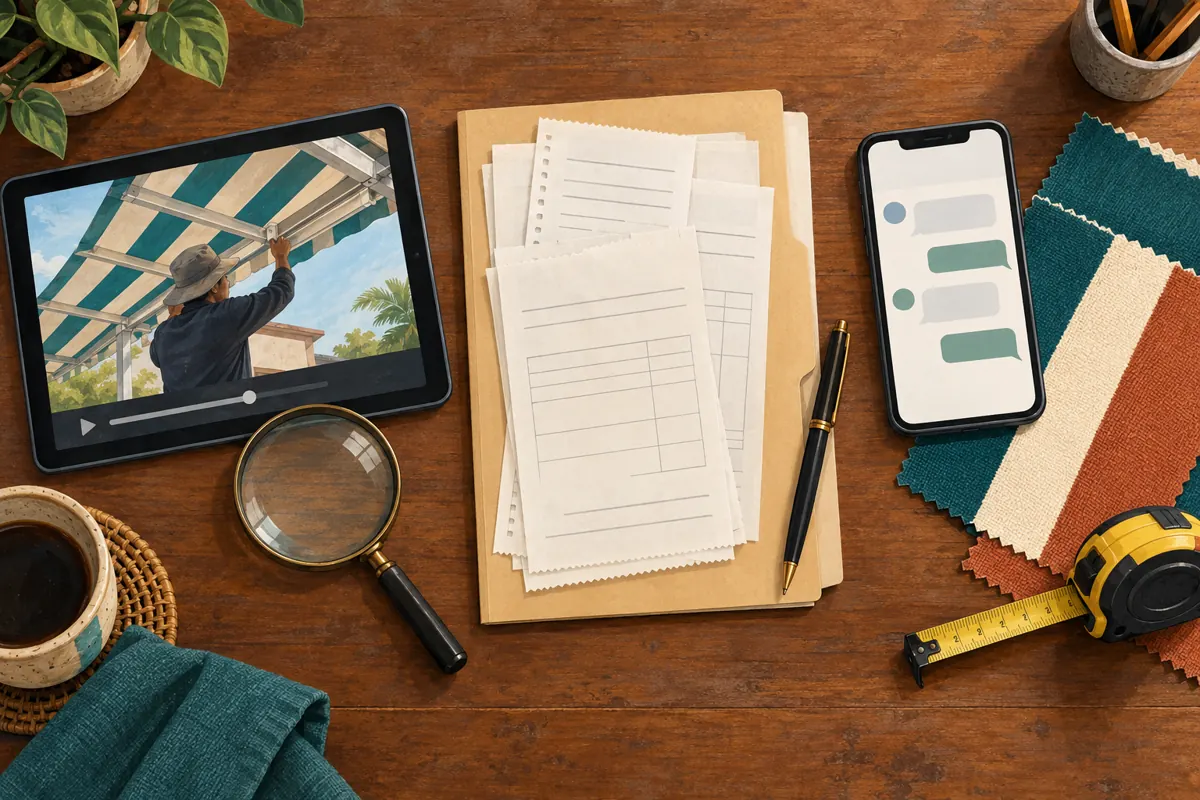
Assign one person to review a selected passage and another to check the product explanation. Keep the record short enough to use during ordinary work: the customer question, observed issue, proposed change, responsible person and next review point. Attach the relevant video link so the next reviewer does not accidentally assess a different model or an earlier version.
Maintain separate records for content observations, any provider transactions and customer enquiries. A completed supplier order belongs in the provider record; it does not become an enquiry or a confirmed booking. When a customer asks about a site visit, record only what they actually requested. Close each review with a practical decision: keep the passage, clarify it, create a separate explanation or gather more information. That gives the next filming session a clear purpose without inventing a success story.
Frequently asked questions
Does a replayed crank demonstration mean customers want that awning?
No. It is a reason to examine the passage, not evidence of demand. Check whether the component and action are understandable, then look separately at enquiries. A request about dimensions or availability supplies information about that particular customer; replay behaviour alone does not.
What should a small Cambodian workshop do when there is little useful data?
Start with a comprehension review instead of purchasing views to enlarge the apparent sample. Ask an unfamiliar viewer to describe the demonstration without help, and inspect the footage for missing context. You can fix an obvious visual obstruction while acknowledging that audience-level conclusions remain uncertain.
Should the workshop remove every passage associated with viewers leaving?
No. First check whether it answers a necessary question and whether the video promised that information. You might improve its presentation, shorten an unnecessary introduction or give a separate topic its own demonstration. Do not remove product limitations merely to make the video appear more engaging.
Can a panel delivery report establish that Cambodian buyers watched?
The supplied service information does not establish that. A provider’s order status and a customer’s location or intentions are different matters. Do not infer Cambodian audience origin, genuine interest, official ad delivery or sales from a catalogue name, delivery claim or increased public counter.
How should the owner describe the result of this review?
Describe the action and its evidence narrowly: for example, “We changed the camera angle after a viewer could not identify the connection.” Label this as a hypothetical reporting example if used publicly. Avoid claiming that the revision increased sales unless separate, reliable business evidence supports that conclusion.
Explore the current service catalogue, create an account, or ask a specific question through support tickets.
Prepared with AI assistance. Illustrations explain the workflow and do not represent customer results.