
22/10/2026 09:33
Craft Response or Buying Interest? TikTok Add Yours for Cambodian Fabric-Offcut Shops
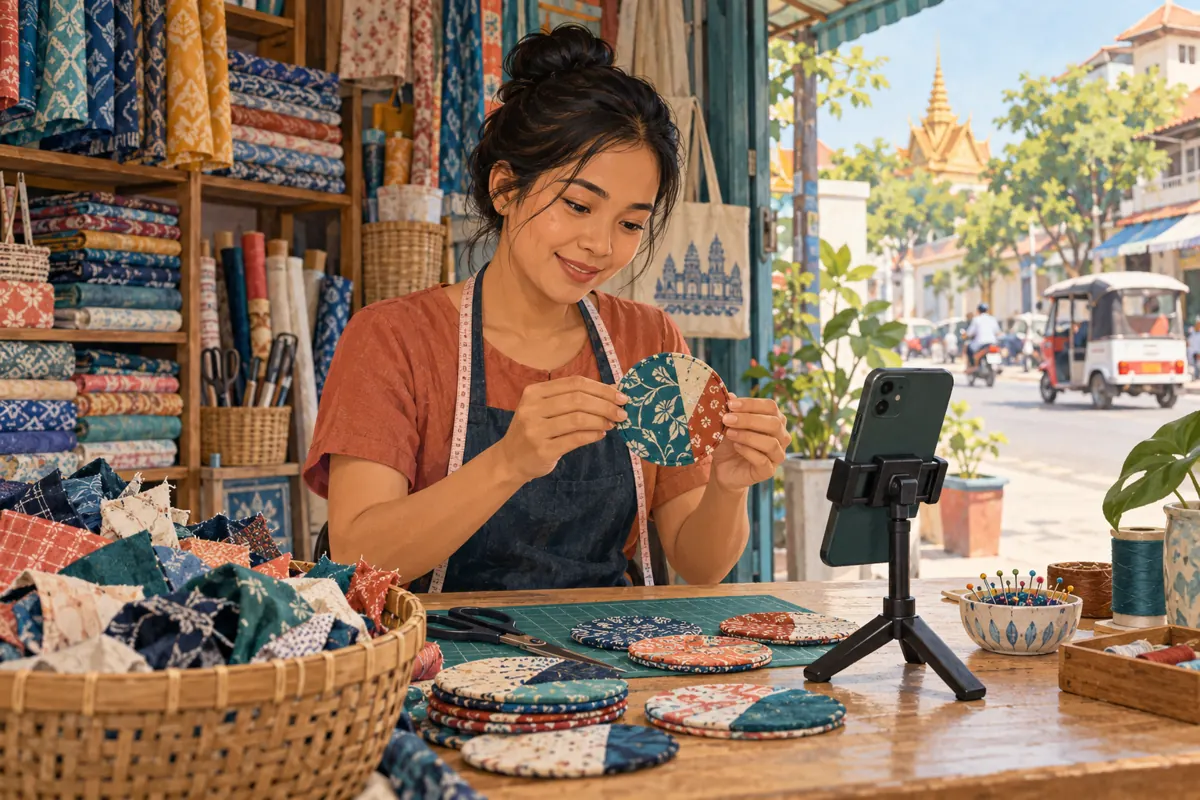
A fabric-offcut shop can demonstrate useful materials without asking everyone to become a customer immediately. A simple invitation to show something made from leftover cotton can start a practical conversation about patchwork, colour combinations and small sewing projects. However, a person sharing a coaster has not necessarily asked to buy fabric. For Cambodian businesses comparing social media promotion with SMM panel services, that distinction matters. This guide explains how to prepare a TikTok Add Yours prompt, make participation understandable, review responses responsibly and decide what deserves a business follow-up. The shop scenario and sample wording throughout are hypothetical, not customer results or promises of performance.
1. Decide whether a creative response answers your business question
Start with the uncertainty you want to resolve. A hypothetical Phnom Penh fabric-offcut shop might want to discover which small projects its audience already makes. Finished craft responses can reveal techniques, material combinations and questions worth explaining. They cannot establish how many customers will visit the shop or whether a particular bundle will sell.
Use Add Yours when seeing another person’s example would be useful. If you only need to announce available colours, publish a clear stock update. If you need dimensions for a quotation, use the shop’s normal enquiry process. Asking people to create a public post adds effort; that effort should have a purpose beyond making the shop’s account look busy.
Write an internal objective before filming: learn what people make from small cotton remnants and identify the next useful demonstration. This keeps the review focused even if the post attracts unrelated attention.
2. Understand what the feature actually invites
TikTok describes Add Yours as a way to invite posts around a prompt. Its help page says prompts are publicly visible and anyone on TikTok can interact, while a response post can have its own privacy setting. Treat the prompt as a public invitation, not a private customer submission form. [TikTok Add Yours guidance](https://support.tiktok.com/en/using-tiktok/creating-videos/add-yours?lang=en).
For the hypothetical shop, the invitation could be: show one useful thing you made from leftover cotton. The accompanying demonstration should make clear that existing projects are welcome and buying the shop’s fabric is unnecessary. A person using scraps from another supplier can still contribute something relevant.
Do not describe respondents as verified customers or local buyers. A public creative response does not confirm where someone lives, where their materials came from or whether they have ever visited your business.
3. Write a prompt people can answer without extra purchases
Choose one object or action rather than a broad demand to display creativity. Show a coaster made from cotton scraps is easier to understand than show your best sustainable lifestyle. The narrower wording also makes responses easier to compare for useful questions about fabric thickness, backing or finishing.
Prepare customer-facing wording in the language your intended participants understand. For a Cambodian shop serving Khmer-speaking customers, have a fluent speaker check that the invitation sounds natural and welcomes beginners. Keep the English planning version separate from the final customer wording. A translation should preserve the request, not introduce a competition or imply that purchasing is required.
Avoid asking for faces, receipts or an entire home workspace. Explain that the finished object on a plain surface is enough. Do not promise prizes, reposts or exposure unless you have a specific, workable arrangement to honour.
4. Film an example that lowers the effort of participating
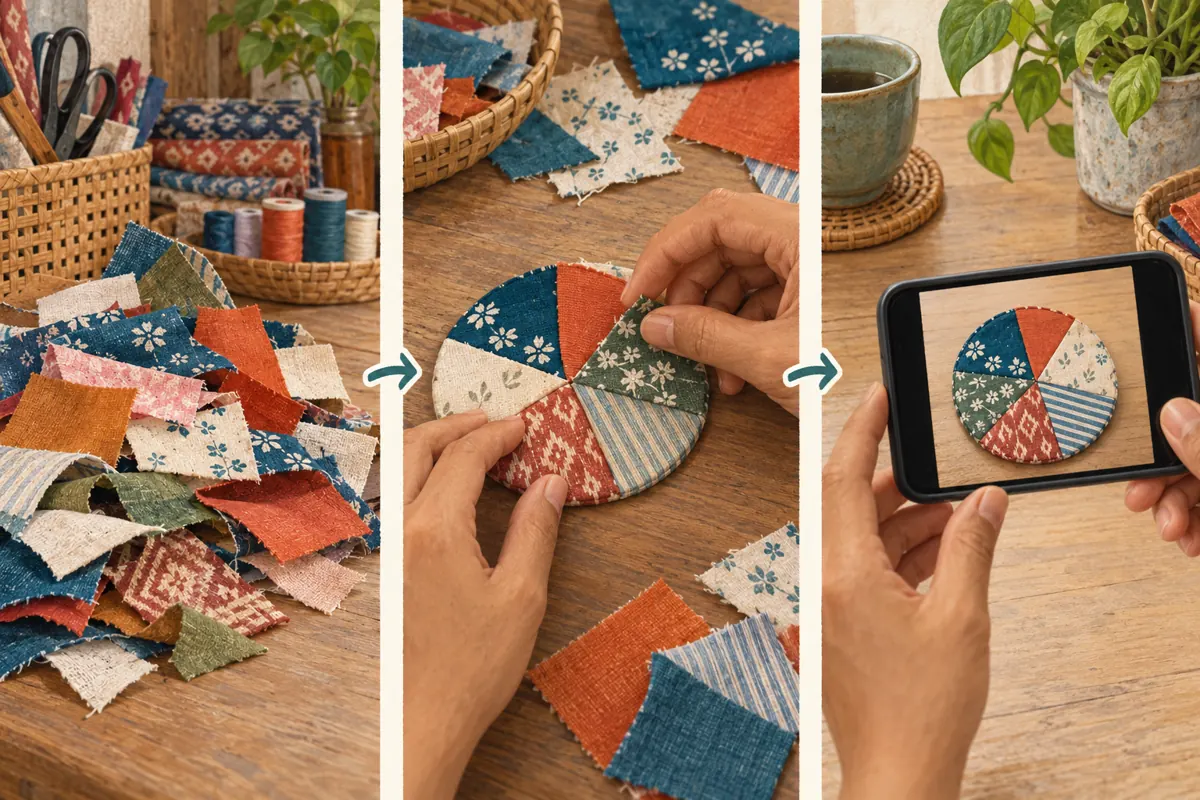
Build the example around three views: the scraps, the finished item and a close look at one useful detail. This is a participation example, so viewers should quickly understand what they could show. If you want to teach construction, make a separate demonstration with enough detail to follow safely.
In the hypothetical coaster example, place the cotton remnants beside the finished coaster, then show its underside. Explain which materials are visible and avoid implying that every offcut has the same composition or suitability. If the shop cannot verify a fabric blend, do not identify it confidently just because it looks familiar.
Check the frame for order books, delivery labels and people who did not agree to appear. Use a plain filming mat and move private items away before recording. Review the clip on a phone to confirm the fabric detail remains understandable.
5. Add the prompt and review the commercial context
TikTok’s documented creation route is to start a post, record or upload media, then choose Add Yours from the editing screen or through Stickers. Enter the prompt and complete the post. Use the controls available in your app; if you cannot find the feature, publish a normal demonstration rather than promising a response button that is absent. [TikTok Add Yours guidance](https://support.tiktok.com/en/using-tiktok/creating-videos/add-yours?lang=en).
A friendly craft invitation can still promote the shop. TikTok requires its commercial content disclosure setting for posts promoting a brand, product or service. Its instructions describe opening Content disclosure and ads, enabling disclosure and selecting whether the post promotes your own brand or branded content. Review the appropriate choice before publication. [TikTok commercial disclosure instructions](https://ads.tiktok.com/resources/help/article/how-to-turn-on-the-commercial-content-disclosure-setting-in-tiktok?lang=en-GB).
Read the prompt and caption together. The prompt should invite the craft example; the caption can explain the shop’s involvement and where genuine stock questions should go.
6. Plan for public participation before the post goes live
Choose someone to review responses and questions during normal working hours. That person needs a simple brief: welcome relevant examples, answer material questions accurately and avoid pressuring participants into sales conversations. Do not make participation depend on following the shop, praising it or sharing a purchase history.
Treat a response as someone else’s creative work. If you want to include it in a shop compilation, ask for specific permission covering the intended use. Agreement to join a prompt is not the same as agreement to appear in a product advertisement. Keep permission records separate from general campaign notes.
If a participant accidentally shows an address or other private detail, do not amplify it through a screenshot or repost. Where practical, send a discreet notice through an available contact route. Keep your own review record focused on the craft question rather than copying unnecessary personal information.
7. Keep SMM panel quantities out of participation claims
The supplied public catalogue includes the exact title “TikTok Likes ~ 𝗛𝗤 𝗔𝗰𝗰𝗼𝘂𝗻𝘁 ~ Max 1M ~ 50k/Days ~ Instant ~ 𝐍𝐎 𝗥𝗘𝗙𝗜𝗟𝗟”. Its category identifies it as a likes service, but the supplied description is empty. The title’s quality, quantity and delivery wording should not be treated as independently verified facts.
A likes service is not a service for collecting thoughtful craft responses. Nothing in the supplied description establishes Cambodian audience origin, genuine interest, sales, ad delivery or official TikTok affiliation. A larger displayed total would not answer whether people understood the invitation or wanted the shop’s materials.
TikTok’s guidelines prohibit services that artificially increase engagement. For this workflow, do not purchase artificial participation or use purchased likes to present the prompt as popular. Allocate effort to the demonstration, translation and response handling. [TikTok Community Guidelines](https://www.tiktok.com/community-guidelines).
If earlier panel activity affected the account, record that context internally. Do not present changes in visible counters as clean evidence that this particular prompt generated genuine interest.

8. Separate craft responses, enquiries and confirmed orders
Use three distinct categories in your review notes. A craft response shows participation in the topic. An enquiry asks about something the business can supply, such as cotton remnants suitable for backing. A confirmed order meets the shop’s usual agreement process for the item, quantity and fulfilment. Movement between these categories must be observed, not assumed.
In a hypothetical example, someone posts a coaster made from fabric already at home. That is a relevant response. Another person asks whether plain backing fabric is available for collection in Phnom Penh. That is an enquiry. Neither should be recorded as a sale until the shop’s normal confirmation requirements are met.
Record the question, any necessary follow-up and its current status. Avoid collecting profile details simply because they are visible. When a buyer mentions the prompt, note that as their reported discovery route rather than claiming the post was the sole cause of purchase.
9. Make the next content decision from specific evidence
Set a review date that fits staff capacity. Read what participants actually show and ask. If people repeatedly struggle with uneven edges, a finishing demonstration may help. If questions concern whether scraps are sold individually or in mixed bundles, clarify the offer. The next post should answer an observed need.
Silence is harder to interpret. People may lack a finished project, dislike posting publicly or misunderstand the example. Before abandoning the idea, ask a colleague unfamiliar with the draft to explain what participation requires. If they cannot answer clearly, revise the wording or simplify the demonstration.
Do not respond to a quiet post by manufacturing popularity. You can still learn from ordinary enquiries and in-shop conversations. Keep those observations labelled by their actual source so they do not become invented Add Yours results.
10. Avoid mistakes that are difficult to undo
Check the final prompt especially carefully. TikTok says a creator cannot remove the Add Yours button from a published post; changing the post’s privacy or deleting the post are documented alternatives. Save the approved wording before posting so staff can check it consistently. [TikTok Add Yours guidance](https://support.tiktok.com/en/using-tiktok/creating-videos/add-yours?lang=en).
Other common mistakes are combining several requests, implying that participation guarantees a feature, and treating every response as a recommendation of the shop. Keep the invitation modest and describe outcomes precisely. Someone displaying a successful craft project has not necessarily endorsed your fabric.
Keep changing stock information separate from the enduring creative invitation. A prompt may remain useful after the illustrated colour is unavailable. When answering a purchase question, check current stock instead of relying on materials shown in an older demonstration.
Frequently asked questions
Should participants have to use fabric bought from our shop?
For this proposed workflow, no. Allowing existing materials makes the invitation easier to answer and supports learning about craft interests. If your real objective is to collect customer product experiences, design a separate request and describe it accurately. Do not relabel open participation as verified customer feedback.
What if someone wants to participate without posting publicly?
Offer a normal enquiry route for anyone who prefers a private conversation, without promising that a private message joins the public prompt. Treat a privately shared project as private unless the person agrees to another use. Record any useful question without copying the person’s photo into promotional materials.
Can a high like count tell us which fabric bundles to stock?
It cannot establish purchase demand on its own. People may appreciate a finished object without wanting its materials. Base stocking decisions on actual product enquiries, confirmed orders and the shop’s existing sales records. Purchased engagement provides no reliable evidence of local buying intent and should not influence that decision.
What should we do when a response asks for a price?
Check which material or bundle the person means before quoting. Confirm current availability and the relevant unit, then move delivery details into the shop’s usual private process. Keep the public answer useful without requesting an address or phone number in the comment thread.
Is the campaign a failure if useful responses do not produce orders?
Judge it against the objective written before posting. A practical question may justify a better demonstration even when it does not lead to a sale. Report that learning honestly and assess whether the staff time was worthwhile. Do not convert educational value into an unsupported claim of revenue or customer acquisition.
Explore the current service catalogue, create an account, or ask a specific question through support tickets.
- TikTok Help Center: Add Yours
- TikTok: How to turn on the Commercial Content Disclosure setting
- TikTok Community Guidelines
Prepared with AI assistance. Illustrations explain the workflow and do not represent customer results.