
19/10/2026 14:30
Should Your Listening Lessons Become a YouTube Podcast? A Workflow for Cambodian Language Schools
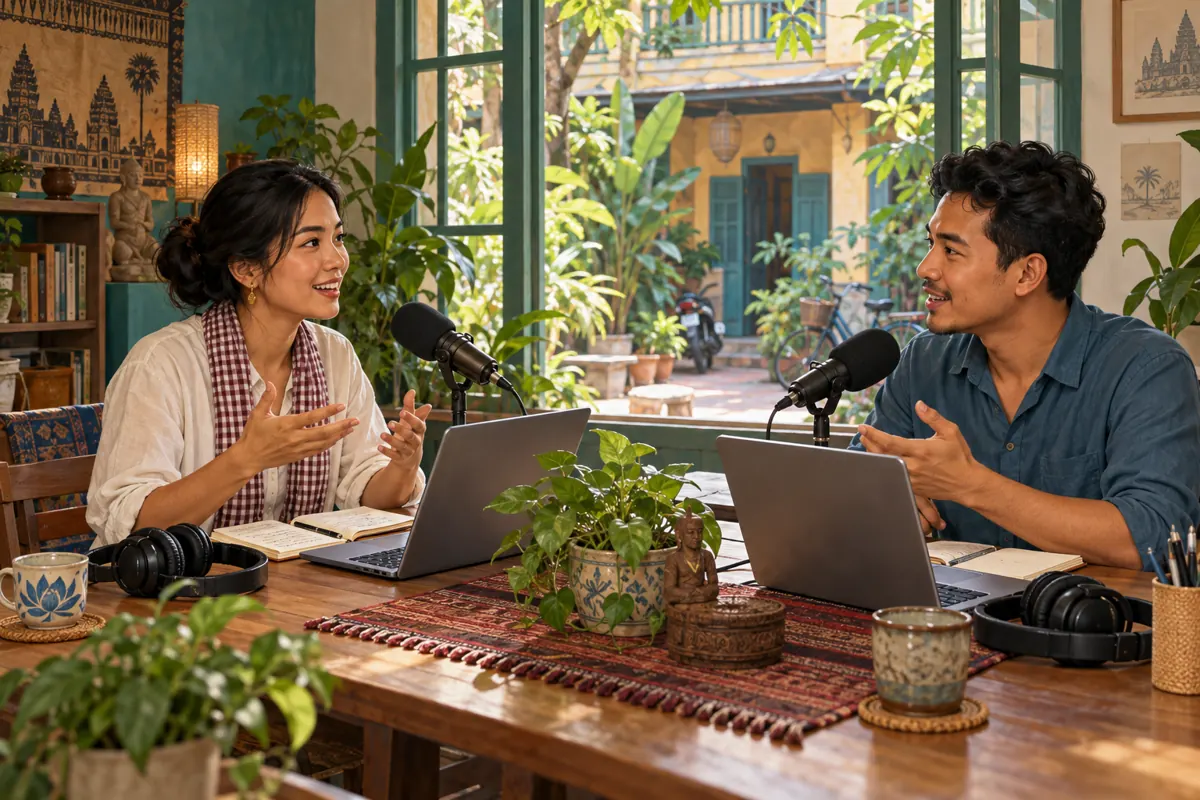
A Cambodian language school may already have useful recorded conversations, pronunciation explanations and classroom demonstrations. Turning those recordings into a YouTube podcast can give prospective students a coherent sample of its teaching. However, a lesson that works on a classroom screen may become confusing when someone only hears it. Before promoting the collection or considering an SMM panel, decide whether the material genuinely supports listening. This workflow follows a hypothetical school preparing English conversation lessons for Cambodian adults. The examples are illustrative, not reports of a real school’s results.
1. Start with one listening problem
Define the learner and the situation before choosing recordings. A school serving hospitality workers might focus on understanding guest requests. Another might teach everyday English to adults preparing for further study. These audiences need different vocabulary, pacing and explanations. Write a brief that names the intended listener, the spoken language, the language used for explanations and one task the listener should complete afterward.
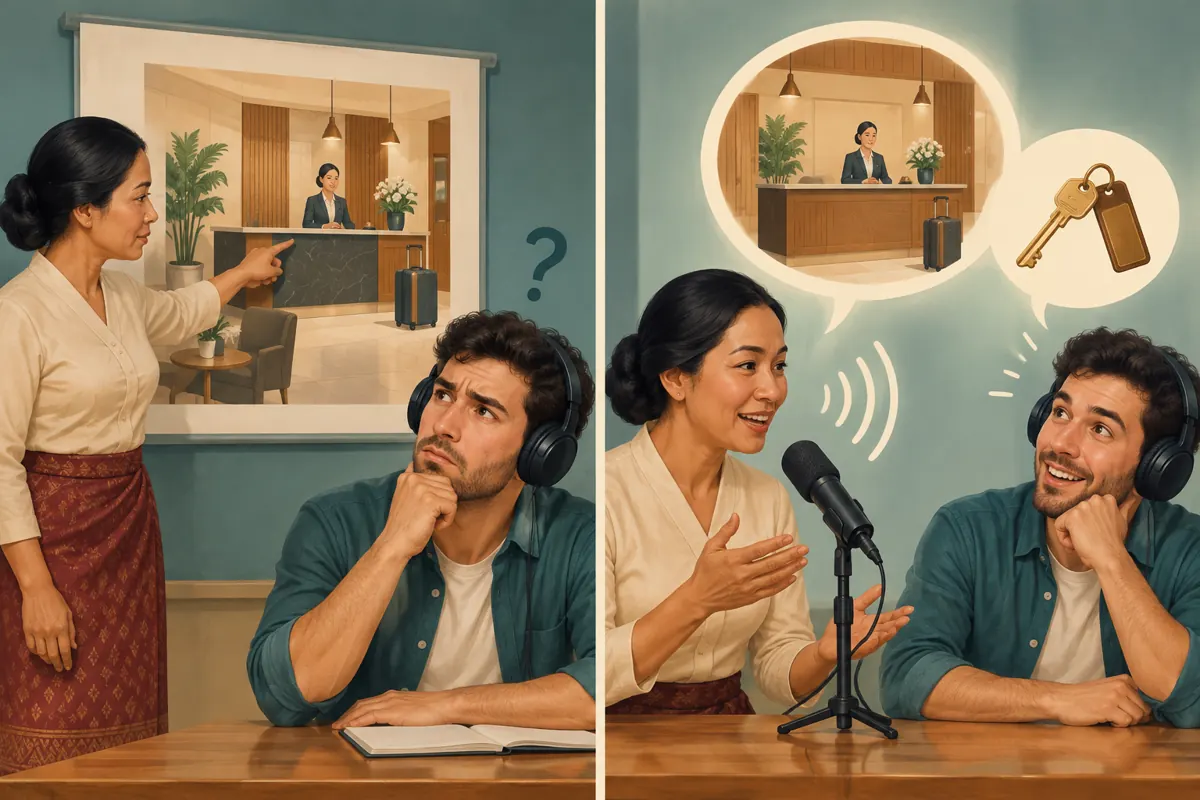
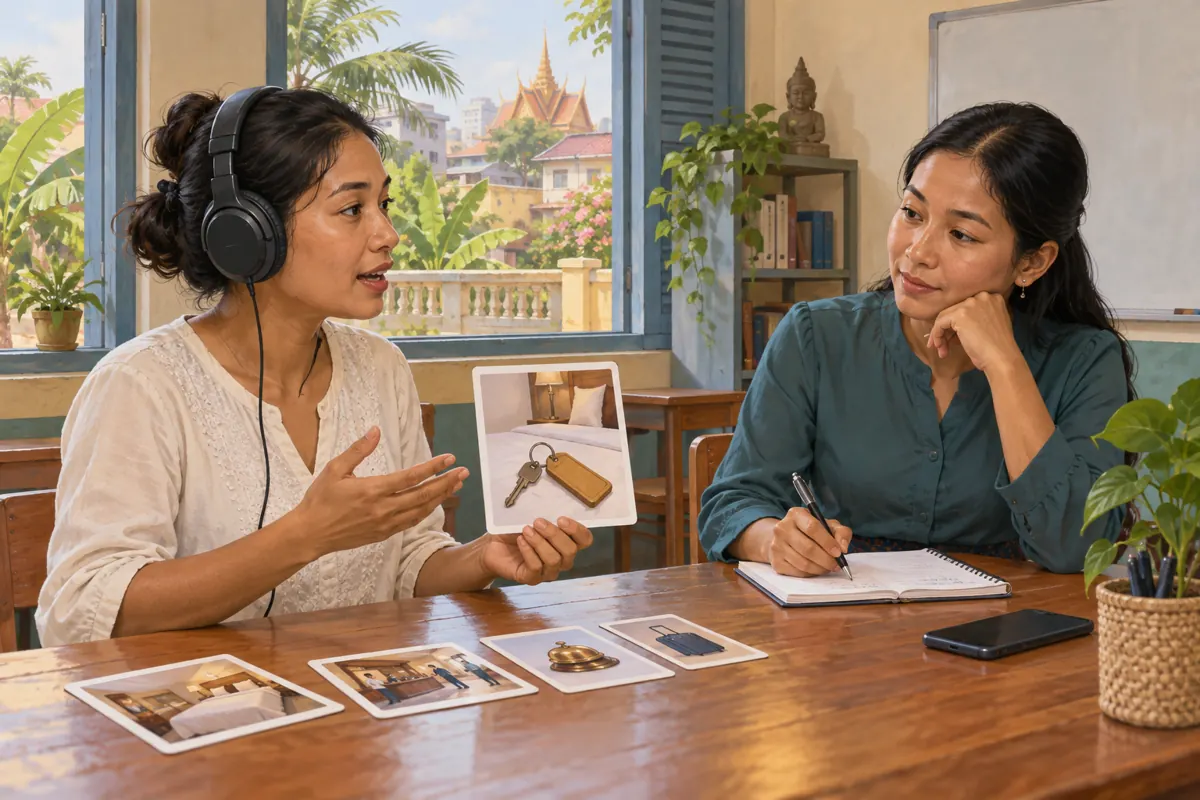
For the hypothetical school, the first episode helps learners distinguish a request for a room key from a question about checkout. Its purpose is narrow enough to test. A prospective student can hear how the teacher explains a misunderstanding and decide whether that approach suits them. Avoid framing the show as a complete qualification or promising fluency from passive listening. Its promotional value comes from making the teaching approach understandable.
2. Decide whether the recordings belong in a podcast
YouTube’s podcast discovery guidance describes a show as a playlist of full episodes. It recommends keeping clips, unrelated shows and other channels’ uploads out of that collection. This gives the school a useful editorial boundary: assemble a recognizable listening series rather than assigning podcast status to every educational upload.
Sort candidate recordings into three practical groups: ready for listening, repairable with narration, and dependent on visuals. A conversation followed by spoken explanation may be ready. A lesson that occasionally says “look at this sentence” may need rewriting. A handwriting demonstration may belong in an ordinary video collection. Judge the actual learning experience rather than the production quality alone.
A full episode should deliver its promised lesson, whatever its sensible duration. Do not stretch a short explanation with repeated introductions or background music merely to make it appear substantial. Keep unrelated school announcements outside the teaching sequence.
3. Run a screen-away listening test
Ask a colleague who has not edited the recording to listen with the screen turned away. Give them the learner brief first, then let the audio play without explanation. Have them note moments when they cannot identify the speaker, understand an instruction or follow a reference. This is an editorial test, not proof that every learner will understand.
Replace visual dependencies with spoken context. Instead of “choose the answer in the second box,” say which question the listener is answering and read the available choices. Introduce role changes explicitly: “Now you will hear the receptionist.” Read out essential vocabulary before explaining it. Leave a deliberate pause for an answer, then provide the explanation so someone listening alone can complete the activity.
Retest the repaired passage in context. An added sentence can solve one ambiguity while making the surrounding lesson repetitive. Keep the explanation concise and make sure its vocabulary matches the intended level.
4. Prepare original material and a repeatable episode structure
Use dialogue written by the teaching team and obtain permission from participating speakers. Do not assume that permission to use a textbook in class includes permission to publish its recorded exercises. Keep a production note identifying the script author, speakers and any licensed audio. Recording an original exchange also lets the school choose situations relevant to its Cambodian learners without copying a commercial course.
Build a repeatable structure: introduce the situation, play the dialogue, explain the difficult point, replay the relevant exchange and finish with a short practice task. In the hypothetical hotel lesson, the teacher explains why a polite request can sound different from a direct question. The explanation should address that distinction before introducing another topic.
Record in a quiet room and check both speakers at an ordinary listening volume. Remove distracting background sound where practical. Music should never compete with the pronunciation detail that the learner needs to hear.
5. Create the podcast and check its contents
YouTube’s setup guide directs creators to Create, then New podcast in YouTube Studio. Enter the show title, description, visibility and a square thumbnail. Add new or existing episode videos. For this direct-upload workflow, prepare video files; an MP3 alone is not a podcast episode upload. An existing suitable playlist can also receive podcast features.
Complete a private editorial review before announcing the show. Check the selected recordings against the approved episode list, then verify the intended public viewing experience when ready. Open each episode and confirm that the beginning, ending and audio match the final version. A familiar filename is not enough to establish that the correct export was uploaded.
Treat the square show artwork as a separate production item from landscape promotional illustrations. Keep its central image recognizable at a small size. Use the school’s established identity with permission, and avoid badges or styling that imply endorsement by YouTube.
6. Make the sequence and language promise clear
Give the show a specific name and explain what listeners will hear. An illustrative description might say that the series practices everyday hospitality English with Khmer explanations for adult beginners. That description helps someone decide whether to listen without claiming a formal level assessment. Have a fluent reviewer check any Khmer wording used in the actual school materials.
Choose an episode sequence that matches the teaching design. If later dialogues require earlier vocabulary, introduce those foundations first. If each lesson stands alone, make that independence clear. YouTube provides episode-order controls in the podcast’s details; inspect the resulting sequence rather than assuming the intended order was preserved.
Write episode titles around the learning situation. “Asking a Guest to Repeat a Request” communicates more than “English Lesson Update.” Keep the wording consistent across the spoken introduction, title and promotional caption. A learner should not arrive expecting pronunciation practice and receive an unrelated enrolment presentation.
7. Promote a useful excerpt with a clear destination
Choose one self-contained exchange for a promotional excerpt. It should demonstrate the teaching style while remaining understandable without the full recording. For the hypothetical school, a short receptionist dialogue could introduce the difference between hearing a request and confirming it. End the accompanying caption by identifying the complete lesson and explaining what additional practice it contains.
Use the school’s established social channels and relevant communities where sharing is permitted. Explain who the lesson helps instead of posting an unexplained link repeatedly. When a learner asks a related question, share the relevant episode with a short explanation of why it addresses that question. Avoid inserting unrelated promotional messages into discussions.
Keep enrolment information distinct from the practice task. A listener can benefit from the free lesson without becoming an applicant. If you invite enquiries, state which class or learning goal the school can discuss and route those enquiries to a monitored contact method.

8. Evaluate an SMM listing against the actual objective
The supplied catalogue includes “Youtube Watch Time ~ Video 60 Min+ Length [ Q 1k=1000 hrs ] ~ 500/days ~ 0-24 Hours ~ 𝗥𝗘𝗙𝗜𝗟𝗟 30D”. Its title presents it as a watch-time service, but the supplied description is empty. The timing, quantity and refill language are catalogue claims, not independently verified performance commitments. Nothing supplied establishes Cambodian listeners, learning interest or policy-compliant delivery.
YouTube’s fake engagement policy prohibits artificially increasing engagement metrics. It also states that a promoter’s actions can affect the channel that hired them. Do not purchase artificial watch time for this podcast. If a provider cannot explain a compliant promotional method, leave that service out of the plan. A small trial does not resolve the underlying policy issue.
Purchased engagement is not evidence of genuine interest, sales, advertising delivery or Cambodian users. Nor does watch time establish comprehension. Put the available production budget toward clearer audio, better explanations or appropriate distribution that can be described and assessed honestly.
9. Review learning usefulness separately from enquiries
YouTube’s podcast distribution guidance lists analytics including impressions, views, traffic sources and watch time. Use available data to develop questions about the show, then investigate those questions. A view does not reveal whether someone understood the dialogue, and an enquiry does not establish that the podcast caused an enrolment.
Keep three short records: content changes, learner feedback and business enquiries. For feedback, ask a willing listener to explain the situation in their own words or identify the confusing phrase. Record the substance without publishing their identity. For enquiries, note which lesson the person mentions, if any, without assigning an origin they did not provide.
Review after a manageable initial group of episodes. If listeners repeatedly misunderstand the same instruction, repair the teaching before broadening promotion. If the lesson is clear but enquiries concern a different class, improve the description and contact instructions. Change one relevant element at a time so the team can explain its reasoning.
10. Avoid shortcuts that weaken the series
The most common editorial shortcut is treating an existing classroom recording as a finished listening episode. Long silences, unexplained board references and inaudible student answers can make an otherwise useful lesson difficult to follow. Another is placing a teaser among full lessons, leaving listeners without the promised practice. Maintain a simple acceptance rule: each episode must explain its own situation and deliver its stated activity.
Operational mistakes also accumulate. A teacher may replace a script while the editor still uses the earlier recording. An administrator may promote an episode before checking the final audio. Assign one person to approve the lesson and another to check the public destination, even if the same small team handles several roles.
Keep the recurring workload realistic. A smaller collection of complete, carefully reviewed lessons gives the school something useful to share. Expand when the team can maintain that standard, rather than using a publication schedule or a panel order as a substitute for editorial readiness.
Frequently asked questions
Should every recorded English class become a podcast episode?
No. Select recordings that deliver a complete listening experience. A class built around written exercises, gestures or individual corrections may require extensive adaptation. Keep it as a conventional video if those visuals remain essential. Podcast selection should follow the learning format, not the desire to reuse every recording.
Should the school explain the lessons in Khmer or English?
Choose according to the intended learner and state the choice clearly. Khmer explanations may help the school’s particular beginner audience, while another group may want English throughout. Test the approach with suitable listeners. Avoid changing the language mix unpredictably between episodes without explaining the change.
Does marking a playlist as a podcast guarantee additional exposure?
No. YouTube describes podcast features as subject to eligibility; applying the setting is not a promise of recommendations or audience growth. Treat setup as organization and distribution preparation. Continue evaluating whether the episodes answer a real learner need and whether your promotion reaches relevant people.
Can a longer episode justify buying a watch-time service?
No. Episode length should follow the teaching task, and artificial engagement remains a policy problem regardless of duration. A catalogue title mentioning long videos does not establish a suitable promotional method. Spend on improving or legitimately distributing the lesson rather than purchasing a metric.
What should the school do if the first episode attracts little feedback?
Ask a small number of willing target learners to try one specific activity and describe where they became confused. Make clear that honest criticism is welcome and public praise is unnecessary. Use their observations to improve the lesson before interpreting quiet comment sections as evidence that the subject is unwanted.
Explore the current service catalogue, create an account, or ask a specific question through support tickets.
- YouTube Help: Create a podcast in YouTube Studio
- YouTube Help: Podcast discovery tips
- YouTube Help: Distribute podcasts on YouTube
- YouTube Help: Fake engagement policy
Prepared with AI assistance. Illustrations explain the workflow and do not represent customer results.