
21/10/2026 21:39
Draft Agreed or Post Published? Telegram Suggested Posts for Cambodian Bicycle-Basket Shops

A bicycle-basket photograph can attract attention while leaving the most important buying question unanswered: will this basket fit the customer's bicycle, and what comes with it? When a Cambodian shop submits that photograph to someone else's Telegram channel, another uncertainty appears. Has the channel merely received the proposal, agreed to the wording, or actually published it? This guide follows a hypothetical Phnom Penh bicycle-accessory shop preparing a placement in a local cycling channel. It explains how to protect the offer's meaning through review, check the published result and evaluate useful enquiries. It also shows why a Telegram member service in an SMM panel cannot substitute for a channel partnership or demonstrate local demand.
1. Define the enquiry the placement should produce
Start with a customer action that your staff can handle. For the hypothetical shop, the objective is to receive basket-fit enquiries containing a bicycle photograph and a preferred collection area. That is more useful than asking everyone to join a channel without explaining what happens next. Decide who will answer, what information they need and which questions require an in-person inspection before anyone can promise compatibility.
Write a short internal brief: the featured basket, the intended customer, the question being answered and the next step. Keep this brief beside the promotional draft. If a proposed edit makes the photograph prettier but removes the fit condition, the brief provides a reason to reject it. A placement is ready when the shop can deliver the conversation it invites, including a clear answer when the basket is unsuitable.
2. Choose a channel by relevance and editorial practice
Review a prospective channel's recent public posts before contacting its administrator. Look for a consistent subject, understandable language and a geographic focus that matches your collection or delivery arrangements. A channel discussing everyday city cycling may suit a practical front basket better than one focused on racing equipment. These observations support a fit assessment; they do not establish where every subscriber lives or whether subscribers intend to buy.
Check how commercial posts are presented. Can readers distinguish a shop's promotion from the administrator's independent advice? Are product conditions preserved, or does every offer become an exaggerated recommendation? Ask what the channel expects from a submission and whether the proposed content is welcome. Record unresolved points before proceeding. A large visible membership number does not answer questions about editorial care, audience suitability or the terms of a placement.
3. Find the submission route and check its conditions
Telegram documents channel direct messages as a way to contact owners and administrators. Where enabled, the message bubble appears in the channel's bottom bar. Owners may charge for direct messages, so inspect any displayed fee before sending. Telegram's official explanation is listed in the sources.
Telegram's suggested-post interface is accessed from the message bar in a channel direct message. It supports a proposed publication time or an Anytime option. The owner can propose changes before both parties approve publication or scheduling. Consult the official suggested-post guide listed below for the feature description.
For your own record, distinguish a draft, a submitted proposal, an agreed version and an observed public post. These are working labels for your shop, not promised Telegram interface labels. If the expected submission control is absent, clarify the channel's accepted process. Do not send repeated proposals or assume that an ordinary message has created a scheduled placement.
4. Build an offer that survives separation from your shop
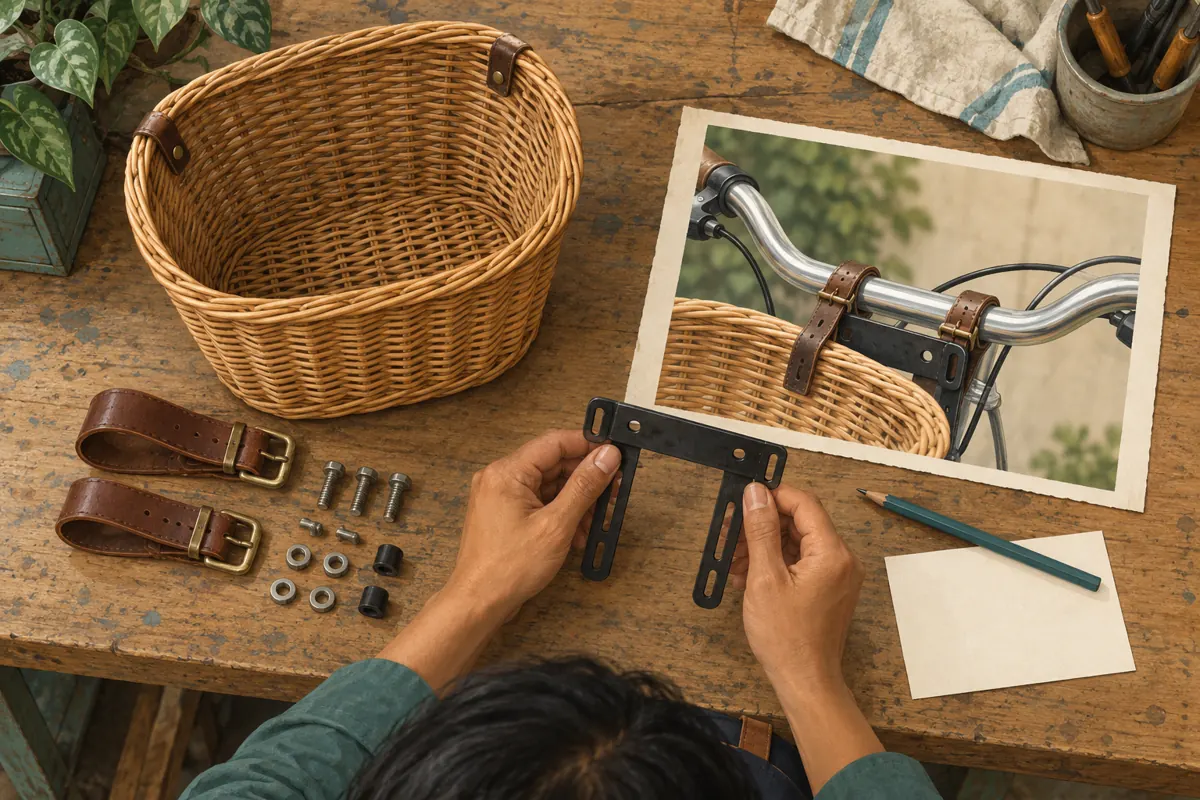
A channel reader may know nothing about your business. Prepare a photograph that shows the actual basket being offered and a caption that identifies the item, included parts, fitting conditions and contact route. If a display bicycle appears in the image, say whether it is excluded. Distinguish a basket-only offer from a basket with brackets or installation. Avoid letting attractive staging imply that every visible accessory is included.
For the hypothetical shop, an English working draft might read: 'Front basket shown with a demonstration bicycle. Bicycle excluded. Send a clear handlebar photograph to ask about mounting compatibility. Installation and collection arrangements are confirmed separately.' Adapt the customer-facing wording into the language the channel actually uses, with a competent reviewer checking meaning. Specify currency whenever a real price is added, and confirm whether delivery or fitting changes the total.
5. Give the administrator a clear editing boundary
Separate flexible presentation choices from facts that require shop approval. The administrator might shorten an opening sentence, change paragraph breaks or request a different crop. Basket dimensions, included hardware, collection arrangements and compatibility conditions need a factual check. Send a compact note identifying these protected details so the administrator does not have to guess which words matter.
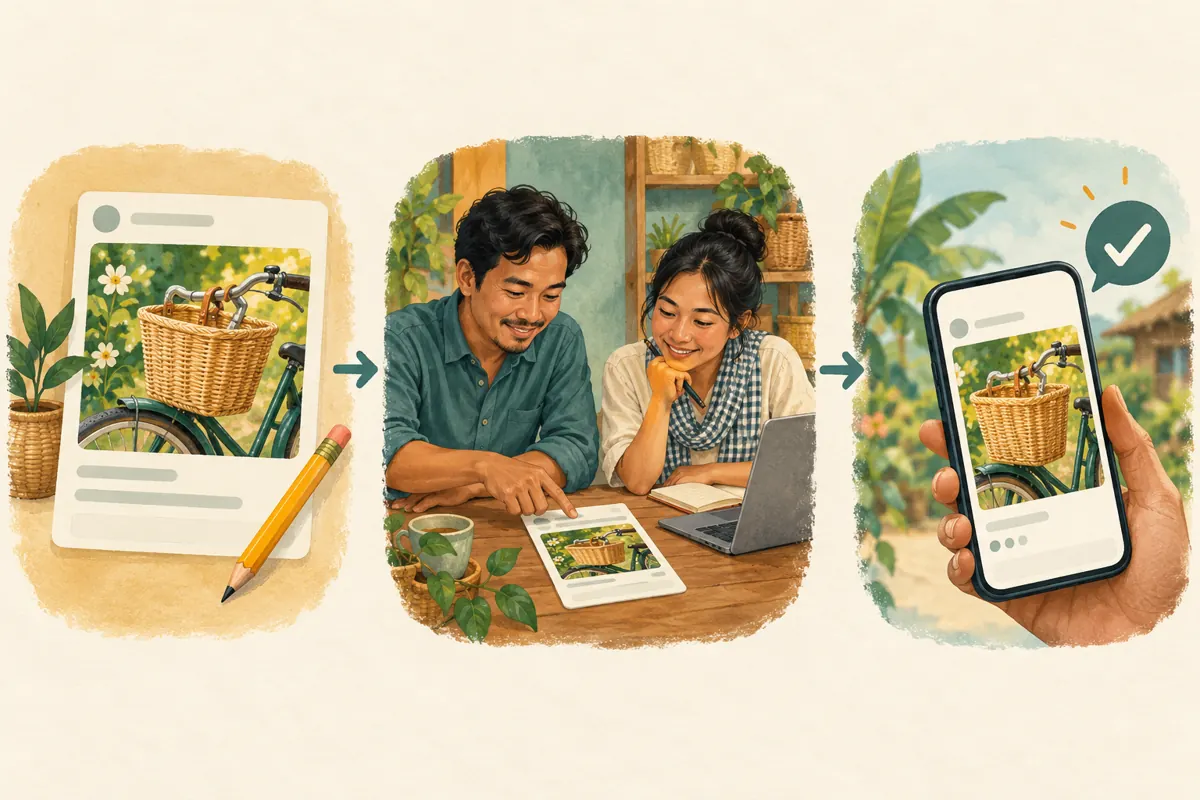
Compare the proposed final version against the product itself, not just against your first draft. In a hypothetical revision, 'ask us to check the mounting' becomes 'fits city bicycles.' That change creates a broader promise even if it sounds smoother. Ask for the condition to be restored. Also inspect the image crop: removing the mounting area may make the post less useful. Approve one identifiable final version and keep its text and media together.
6. Agree on disclosure, timing and correction handling
Make the commercial relationship understandable to readers. For a paid placement, agree on a clear advertising or sponsored-post label in the audience's language. Do not request wording that presents the administrator as a satisfied customer unless there is a genuine, accurately described experience. A shop can explain its product without borrowing an invented recommendation.
Choose a publication window when someone can answer enquiries and the featured item can still be supplied. Write the date and time zone explicitly in your agreement, especially if the administrator works elsewhere. Agree on who to contact if stock changes or a factual correction becomes necessary. Telegram allows optional Stars or Toncoin offers for suggested posts, but a payment arrangement does not establish audience quality. Review any displayed terms separately from your editorial approval; no payment amount or delivery outcome is assumed here.
7. Keep SMM-panel member services separate from placement
The supplied public catalogue includes the exact title 'Telegram Members ~ Max 1M ~ 50k/days ~ Instant ~ 𝐍𝐎 𝗥𝗘𝗙𝗜𝗟𝗟'. Its title identifies a member-oriented listing. The supplied description is empty, so it provides no further basis for verifying audience location, account quality, timing or business outcomes. The title's numerical and delivery language should not be treated as independently verified performance.
That listing does not establish that the provider can negotiate a post with your chosen cycling channel. Do not interpret a member order as publication approval, editorial review or advertising delivery. Purchased engagement is not evidence of genuine interest, sales or Cambodian users. If your objective is a useful placement, budget and evaluate that placement directly. If a member service is being considered separately, first check applicable platform rules and provider terms, and keep its records outside the placement results.
8. Verify the public post before announcing completion
At the agreed review time, open the destination channel and inspect the actual post. Confirm the basket photograph, caption, commercial disclosure and contact destination. Follow the contact route yourself to check that it reaches the intended shop conversation. A screenshot of an agreed draft is useful for comparison, but it does not show what readers can currently access.
Save the public post reference where available, the observation time and the version you checked. If you cannot find the post, ask the administrator for its location and current status before concluding that it was published or missed. If it contains a material error, describe the exact sentence or image problem and the correction needed. Avoid sending a second placement request as an improvised fix; that can create duplicate or contradictory offers.
9. Record enquiries without turning them into sales
Use a simple enquiry log containing the date, the customer's stated source, the basket requested, missing fit information and the next action. Ask naturally how the person found the shop. If the person does not know, mark the source as unknown. Do not assign every conversation that week to the cycling channel merely because the placement happened first.
Keep business stages distinct: a message received, fit information supplied, a quotation sent and an order confirmed. For example, in a hypothetical conversation, a reader sends a bicycle photograph but needs a different bracket. That is a useful compatibility enquiry, not a sale of the advertised basket. Record the reason the original offer did not fit. Such details can improve the next photograph or caption without inventing a conversion claim.
10. Use the review to decide whether to repeat
After the agreed observation period, review publication accuracy and customer questions separately. If the post appeared correctly but people repeatedly asked whether the bicycle was included, the offer needs clearer framing. If relevant readers understood the offer but collection was impractical, reconsider the service area or channel choice. If no attributable enquiries appeared, record that limited observation without claiming that nobody saw or valued the post.
Common mistakes include approving only the image, accepting edits without rereading conditions, treating an administrator's acknowledgement as completion and comparing channel size with confirmed orders. Another mistake is repeating an offer after the featured hardware has changed. Before another placement, refresh the product facts, review the destination again and decide what specific improvement you are testing. Repeat because the workflow produced useful evidence, not because a visible count increased.

Frequently asked questions
Does approval mean that readers can already see the post?
Do not use approval alone as your completion evidence. Your shop needs an observation of the public result. Check the channel at the agreed time, compare the content with the approved version and retain the post reference. If the post is missing, ask for its current status rather than announcing that the promotion is live.
What should we do if the administrator removes a fitting condition?
Explain what buying expectation the missing condition would create and supply concise replacement wording. Pause your approval until the version is accurate. For a bicycle basket, a broad compatibility claim can generate unsuitable enquiries and disappointment. If the administrator will not preserve a necessary product limitation, decline that version of the placement.
Can we use English copy in a Cambodian channel?
Use the language readers can understand and the channel accepts. An English internal draft can help organize facts, but it should not dictate the published language. Have a competent reviewer check any Khmer adaptation, especially exclusions, mounting terms and collection instructions. Keep product references consistent so staff can connect the enquiry to the correct basket.
Should we buy Telegram members before approaching a channel?
A larger count is not a prerequisite established by this workflow. Prepare a clear product offer, a working contact route and reliable answers instead. Member purchases cannot prove that your audience is Cambodian or commercially interested. They also cannot demonstrate that another channel has accepted, published or successfully delivered your proposed promotion.
What evidence is useful when deciding on another placement?
Combine the checked public post with a modest enquiry log: which questions arrived, what information was missing and whether customers could proceed. Note attribution uncertainty and operational problems. A single placement may provide only limited evidence. Use it to improve the next decision without presenting message volume, membership changes or an isolated order as a guaranteed future result.
Explore the current service catalogue, create an account, or ask a specific question through support tickets.
- Telegram: Checklists, Suggested Posts and More Monetization Options for Channels
- Telegram: Direct Messages for Channels, Voice Trimming, Topic Tabs and HD Photos
Prepared with AI assistance. Illustrations explain the workflow and do not represent customer results.