
21/10/2026 10:19
Who Can Mention Your Workshop? TikTok Permissions for Cambodian Screen-Printing Shops

A customer posts a tote bag and tries to mention the workshop that printed it. Another person mentions the same shop beneath an unrelated promotion. Both involve an account reference, but they deserve different responses. For Cambodian screen-printing businesses, a useful mention workflow starts with deciding who should be able to reach the shop this way, then checking what each reference actually means. This guide explains how to choose permissions, test them with a willing participant, review the surrounding content and move genuine printing questions into a quotation process. It also explains why buying comments through an SMM panel cannot solve a mention-permission problem or demonstrate customer demand.
1. Define what a useful mention would accomplish
Begin with a business situation rather than a target for more activity. A workshop might want customers to identify it when showing a finished print, ask whether it can reproduce a design on another fabric, or connect an event organiser with the correct supplier. These are different purposes. Decide which ones staff can handle and what information each response needs before inviting people to mention the account.
In a hypothetical Phnom Penh workshop, a café posts a photograph of printed aprons and refers a neighbouring business to the printer. The useful outcome is a conversation about garment type, artwork and timing. The reference alone does not establish that the neighbouring business wants a quote. Staff should first read the question and avoid treating a public introduction as an order. This distinction keeps promotion connected to the work the shop can actually deliver.
2. Choose who may mention the account
TikTok’s official help describes mention controls for comments, Stories, photo posts and video descriptions. Its documented route is Profile, Menu, Settings and privacy, Privacy, Mentions and tags, then Mentions. The choices are Everyone, People you follow, Friends, or No one. Friends means followers whom you also follow back. Review the options shown in your own app before changing the setting.
Choose according to the intended relationship. Everyone may suit a workshop inviting references from first-time customers, provided someone can review incoming activity. People you follow is more selective. Friends requires a reciprocal relationship, while No one closes this mention route. A restrictive choice can conflict with an invitation to unfamiliar customers. Conversely, opening access without assigning review time can create unanswered questions. Select the setting for a clear operating reason, record it and ensure the shop’s public instructions match that choice.
3. Test the invitation from the customer’s position
After choosing the permission, ask a willing colleague or collaborator to test the intended action from their own account. Note whether the workshop follows that account and whether the relationship is reciprocal. A successful test with a mutual follower does not establish what an unfamiliar customer can do. Match the tester’s relationship to the audience you plan to invite.
Use a harmless sample post or relevant conversation, with the participant’s agreement. Have them select the intended workshop account and check where that reference leads. The reviewer should confirm that the correct profile opens and that the surrounding content is understandable. If the test fails, inspect the selected account and the mention setting before changing other controls. Do not create a collection of artificial customer accounts or publish invented praise as a test. Record the observed result, including any limitation, instead of assuming that every customer will have the same experience.
4. Make the correct workshop easy to recognise
A customer may know the Khmer shop name while an employee recognises its English spelling. Similar names can also belong to unrelated businesses. Give customers one consistent account reference alongside recognisable workshop information. When staff send instructions, copy the reference from the actual profile rather than reconstructing it from memory. Ask customers to verify the profile’s identity before mentioning it in a public post.
Keep the invitation narrow and understandable. For example, a hypothetical instruction could say: “If you share your finished tote, you may mention our workshop. For a quotation, use our listed contact method and tell us the item and quantity.” Prepare a Khmer version for customers who prefer Khmer, with a fluent reviewer checking the meaning. Avoid wording that makes a mention sound compulsory, promises a discount that has not been approved, or suggests that mentioning the shop reserves production capacity.
5. Read the whole post before replying
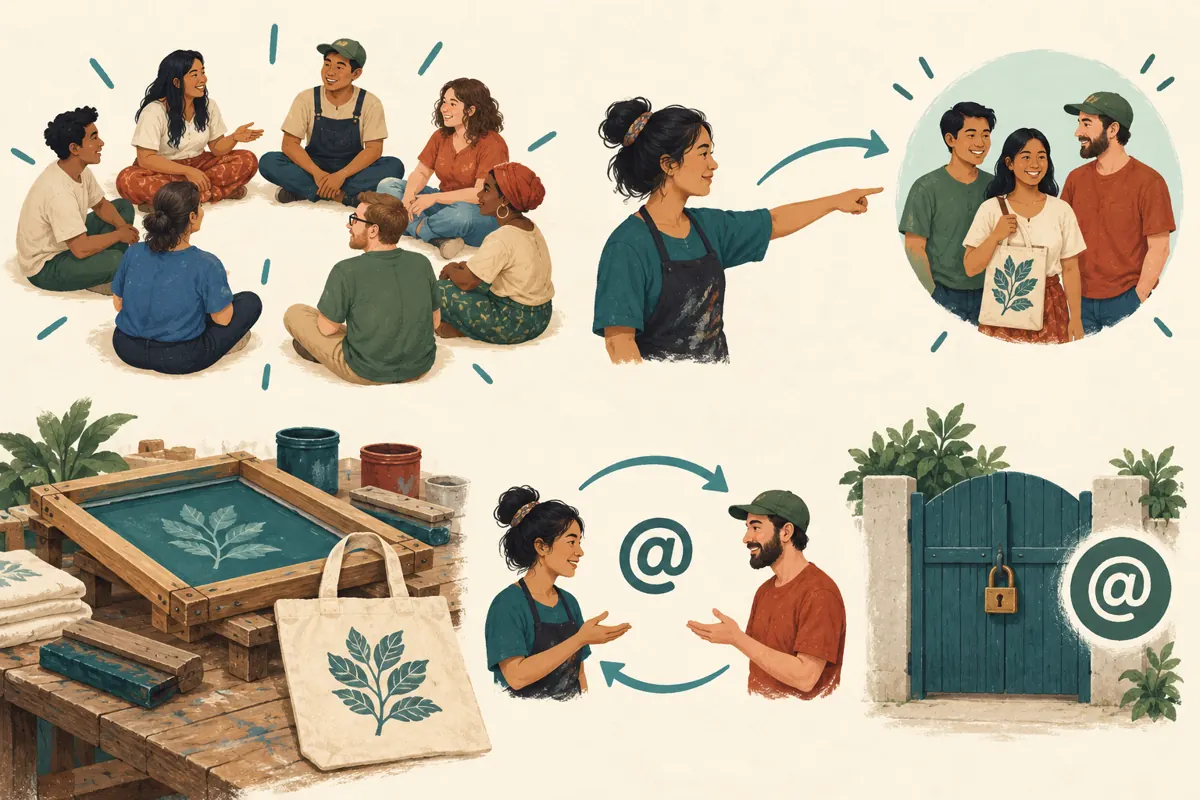
Assign a reviewer to open the surrounding content before responding. Identify whether it is a product question, an attribution, a complaint, an unrelated reference or something uncertain. A photograph of a tote bag may show a sample, an older order or another printer’s work. The reviewer should establish what the person is asking without claiming responsibility for an item that staff cannot identify.
For a relevant question, answer the part that is already clear and ask only for the next useful detail. In a hypothetical case, someone asks whether a pictured design can go on dark fabric. Staff could explain that they need to review the artwork and fabric before confirming suitability. They should not promise an identical result from a photograph alone. For unrelated references, avoid forcing a sales reply into the conversation. Where content appears abusive or deceptive, use the platform’s available reporting or account controls as appropriate.
6. Move quotation details into an agreed contact route
A mention is a poor place to assemble a complete production brief. After acknowledging a real enquiry, direct the person to the contact method the workshop actually monitors. Do not assume every customer can use the same messaging feature. Offer a practical alternative already listed by the business, and explain what to send first: item type, approximate quantity, artwork status and required date.
Keep sensitive order details out of public replies. Customer phone numbers, delivery addresses and private artwork should travel through the agreed enquiry channel. In a hypothetical Siem Reap order, an organiser might ask publicly about printing volunteer shirts. Staff can discuss general preparation, then request the design and delivery requirements privately. Record the enquiry as awaiting assessment until someone confirms feasibility. A friendly reply does not mean artwork approval, payment received or a production slot booked.
7. Ask separately before reusing customer content
Being mentioned in a photograph does not tell the workshop how the creator wants that photograph used. Treat reposting, adding it to a portfolio and using it in promotional material as separate decisions. Ask for permission that describes the intended use, and check whether other people, private details or third-party designs appear in the material. This is a practical consent workflow, not an assumption that a public post grants unrestricted reuse.
For example, a hypothetical customer may welcome a simple acknowledgement but prefer that their café launch remain off the printer’s promotional feed until opening day. Record that condition beside the permission. If the image includes a customer’s unreleased design, offer to photograph a neutral workshop sample instead. Staff should also avoid turning a casual mention into a testimonial. Preserve the person’s actual meaning and never add satisfaction claims, order details or endorsements that they did not provide.

8. Evaluate SMM panel services against the actual problem
The supplied catalogue includes the exact public service name “TikTok Random Comments | Arabic 🇸🇦 | Instant Start”. Its description is empty. The name presents a random-comment offering with an Arabic language label, but the brief supplies no detailed evidence about delivery conditions, account authenticity or suitability. It does not establish a service for customer mentions, Khmer enquiries or Cambodian audience targeting.
This matters because purchasing comments cannot repair a restrictive mention setting or clarify a customer’s printing requirements. TikTok’s official statement on deceptive behaviour says it prohibits fake engagement, including services that artificially increase engagement. Evaluate a proposed purchase against platform rules before spending. For this workflow, improving access instructions and answering genuine questions addresses the problem more directly. Purchased engagement is not evidence of genuine interest, sales, ad delivery or Cambodian users, and a catalogue listing is not proof of an official platform relationship.
9. Keep mention activity, supplier records and orders separate
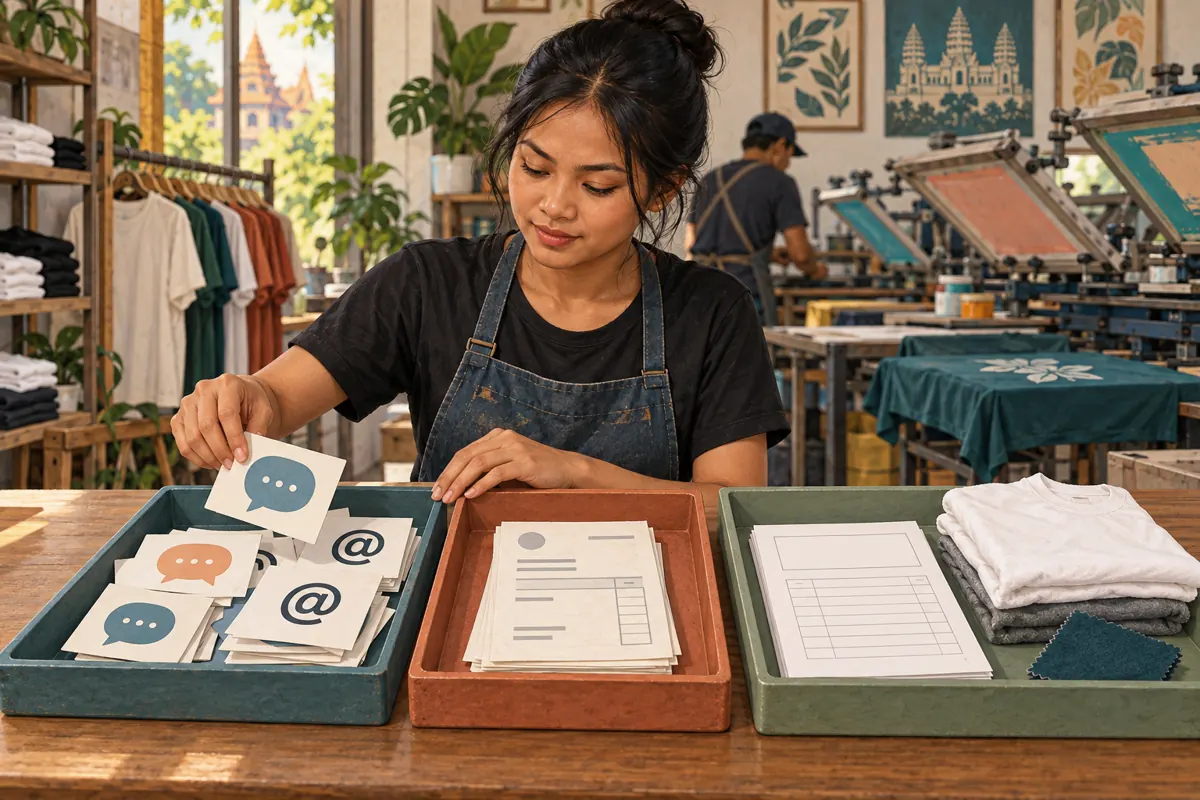
Use a simple review sheet with the date, public reference, topic, assigned reviewer and next action. Keep only the information needed to handle the conversation. Useful statuses might include “question answered”, “waiting for artwork” and “sent to quotation review”. Do not mark an enquiry as a sale simply because someone mentioned the workshop or responded positively.
If the business has existing panel orders, retain those supplier records separately from customer conversations. A provider’s delivery status describes a service transaction; it does not prove that a customer wants printing. Likewise, avoid attributing every later enquiry to a particular mention. Ask customers how they found the workshop when appropriate and record their answer as self-reported information. Review whether enquiries contain enough detail to assess, whether staff answer consistently and whether confusing instructions recur. These observations are more useful than celebrating a larger pile of unexplained notifications.
10. Correct recurring mistakes before promoting again
Common mistakes include inviting everyone to mention the shop while allowing only friends, testing solely with a staff account the shop follows, and replying without checking the original post. Another is following unfamiliar accounts merely to bypass a restrictive choice, without considering why the restriction was selected. Resolve the underlying decision instead of creating an inconsistent collection of exceptions.
At the end of a review period, choose one practical improvement. If customers reference the wrong account, revise the instructions. If mentions produce questions without artwork or quantities, improve the quotation handoff. If staff cannot review incoming references reliably, reconsider the invitation and access setting. Keep useful criticism visible to the responsible employee even when it is uncomfortable. The goal is an understandable route from public reference to appropriate response, with permission, production assessment and customer intent checked at the point where each matters.
Frequently asked questions
Should a small workshop always allow mentions from everyone?
No single choice suits every workshop. Open access can fit an invitation to first-time customers, but it also requires a realistic review process. A shop working only with known collaborators may prefer narrower access. Choose based on the relationships you want to support and make sure customers have another clear way to enquire.
Why did the test work for an employee but fail for a customer?
Compare the account relationships before drawing a conclusion. The workshop may follow the employee or be mutual followers with them, while having no such relationship with the customer. Recheck the selected permission and the exact account being mentioned. Record what you can reproduce rather than assuming a platform-wide fault.
Does a customer mention count as permission to advertise their photograph?
Treat it as a reference to the workshop, not a complete reuse agreement. Ask what use the creator permits, including where the image would appear and whether timing or credit matters. If permission is unclear, acknowledge the original conversation without copying the image into promotional material.
Can a random-comment service help prove that local buyers want our printing?
No. Purchased comments do not establish location, buying intent or suitability for your work. The supplied service description is empty, and its title does not substantiate Cambodian targeting. Assess demand through genuine enquiries and confirmed customer decisions, while checking any proposed promotional service against the platform’s rules.
Explore the current service catalogue, create an account, or ask a specific question through support tickets.
- TikTok Help Center: Mentions on TikTok — official Spanish-language documentation
- TikTok Newsroom: How TikTok counters deceptive behaviour
Prepared with AI assistance. Illustrations explain the workflow and do not represent customer results.